Home » Uncategorized

Category: Uncategorized

Garlic Lemon Mushrooms

Looking for a holiday side dish that literally goes with just about any main? ✨ Garlic Lemon Mushrooms are the answer! I’ve served them alongside golden roast turkey and rich, juicy prime rib, and they steal a little spotlight every single time.

These mushrooms are tender, buttery, and bursting with garlicky goodness, finished with a bright squeeze of lemon that wakes up your taste buds in the best way. They add that just-right pop of flavor to your Christmas dinner—savory, zesty, and utterly irresistible.

Even better? This is one of those stress-saving dishes you can make ahead. While you’re putting the final touches on salads or carving the main, these mushrooms are already done and waiting. Simply warm them up in the microwave or your warming drawer, and voilà—an elegant, crowd-pleasing side dish that tastes like you fussed (even if you didn’t 😉).


Watch Video

Garlic Lemon Mushrooms

A side with flavor
Course Side Dish
Cuisine American
Servings 8

Equipment

  • 1 Roasting Pan

Ingredients
  

  • 2 lbs portobello mushrooms sliced
  • 2/3 cup butter or evoo or a combination
  • 2 lemons zest and juice
  • 8 cloves garlic minced
  • 2 tsp thyme dried or 4 tsp fresh
  • 2 tsp Italian seasoning
  • 1/2 cup parsley chopped

Instructions
 

  • Preheat oven to 400 degrees
  • Mix all ingredients except lemon juice  in a bowl and transfer to a sheet pan lined with parchment paper
  • Roast at 400 for 25 minutes
  • Remove from oven and place in a serving dish.  Drizzle with lemon juice.  Sprinkle with extra thyme. Serve warm.

Notes

Can be easily made a day or two ahead and warmed before serving.
Keyword Garlic, Lemon, Mushrooms, Thyme

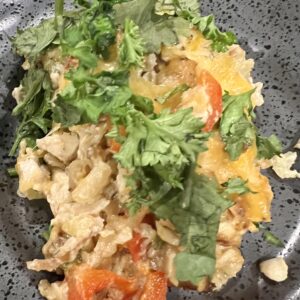
Pumpkin Queso Fundido

This dip is nothing short of irresistible! I’ve made it several times as an appetizer, and without fail, it always earns an enthusiastic YUM! The combination of pumpkin, chorizo, and melty cheeses creates a rich, velvety bite that’s absolute perfection on a crisp corn chip.

I’ve tried it using both fresh pumpkin and canned pumpkin purée, and the results are equally delicious. It also makes a fantastic make-ahead dish—the flavors deepen and meld beautifully as it rests.

A true crowd-pleaser and a decadent little indulgence, this dip sets the tone for a memorable holiday meal. Serve it once, and it’s sure to become a seasonal favorite!

Watch Short Video

Pumpkin Queso Fundido

Indulgence with a twist
Prep Time 20 minutes
Cook Time 20 minutes
Course Appetizer
Cuisine American, Mexican
Servings 10

Ingredients
  

  • 1/2 lb chorizo sausage no casing
  • 3 jalapeno peppers seeded and diced
  • 1/2 onion sweet if possible, diced
  • 2 garlic cloves minced
  • 1 tsp ground cumin
  • 1/4 tsp cayenne pepper, salt and pepper to taste
  • 1 1/2 cups half and half divided into 1 cup and 1/2 cup
  • 1 1/4 cup pumpkin puree or fresh pumpkin
  • 24 oz cheddar cheese freshly grated
  • 1 cup chicken bone broth or as much needed to slightly thin sauce

Garnish

  • 3-4 tbsp roasted pepitas
  • cilantro loosely chopped
  • cojita cheese enough to sprinkle on surface

Instructions
 

  • Heat a nonstick skillet over medium-low heat and add the chorizo. Break apart and cook for about 5 - 6 minutes, or until it is browned. Transfer to a paper-towel lined bowl.
  • Add 1 tbsp evoo, unless there is still oil from the chorizo. Stir in the peppers, onion, and garlic. add cumin, cayenne pepper, salt and pepper. Cook about 5 - 6 minutes. Slowly pour in 1 cup of the half and half - whisking the entire time.
  • In a small bowl whisk together the remainder of 1/2 and 1/2 with the cornstarch. Stir into the saucepan until thickens. Add approximately 1 cup of broth to thin.
  • With the heat on low, stir in the grated cheese, one handful at a time, until melted. Stir in the pumpkin until combined. Transfer the fundido to a serving bowl and top with pipits cilantro, and/or a sprinkling of cojita cheese.

Notes

Monterrey Jack, white cheddar, Oaxaca, Asadero, Chihuahua can be used interchangeably.  The chorizo can be used as a topping instead of mixing in the cheese.  
I have had good luck with freezing as it makes quite a bit.  
Keyword pumpkin, queso, chorizo, cheddar, dip

Brian’s Sour Dough Bread

As November approaches, it’s hard not to get excited about the vibrant images that fill our minds—Thanksgiving dinners bursting with joy, thrilling football rivalries, and the enchanting start of the Christmas season. But before we dive into those festivities, let’s take a moment to honor a truly important day: Veterans Day on November 11th. Texas proudly hosts 15 active military bases, representing all branches of the military.

Another noteworthy celebration in November, though perhaps not as widely recognized, is the birthday of the Marine Corps on November 10th. This esteemed branch was established 250 years ago in Philadelphia through a resolution from the Second Continental Congress as our nation’s maritime land force.

The year 2025 marks a particularly momentous occasion! Across the country, public events will celebrate this significant anniversary. A specially minted half-dollar coin also salutes this milestone. The highlight will be the grand 100th Marine Corps Birthday Ball, scheduled for November 10, 2025, at the Bellevue Hotel in Philadelphia (where the first ball was held).

Yet, the most inspiring stories come from the courageous Marines who have dedicated their lives to our freedom. I recently spoke with Brian Koch, a proud Texan and veteran, who shared heartfelt insights into his service. Stay tuned for his remarkable journey!

“I enlisted in the United States Marine Corps on August 27, 2001, just two weeks before the September 11th attacks. At the time, I thought I would spend my four years of service during a period of peace, never imagining that my enlistment would soon lead me into combat. Everything changed when the nation was thrust into war, and by February 2003, I was deployed overseas.

From Kuwait, I entered Iraq on March 20, 2003, with India Battery, Third Battalion, 11th Marines out of Twentynine Palms. I served as part of the Fire Direction Control (FDC) element of our artillery battalion, responsible for coordinating the fire of six 155mm howitzer cannons. That role gave me a unique perspective on how our unit supported Marines on the front lines.

Just one year later, I deployed to Iraq again, serving a total of 13 months in the country over the course of two combat tours. During these deployments, I earned the Navy Achievement Medal, the Presidential Unit Citation, and the Combat Action Ribbon—recognition that reflected the sacrifices and challenges my unit and I faced together.

Although the experiences were difficult and demanding, I look back on them with pride. Serving my country during a time of war was an honor, and the lessons I learned and the bonds I built will stay with me for the rest of my life.”

Brian also gave insight to the importance of November 10th to him:

‘The Marine Corps birthday has always been special to me. It was the one time of the year we got to put on our dress blue uniform, show our ribbons and medals, and celebrate our history together.”

Thank you, Brian Koch, for your service to our country!

Brian is now happily married and a proud father of two wonderful children! Currently, his passion for making sourdough bread has blossomed into a delightful way to connect with neighbors and friends. He finds great joy in sharing a fresh loaf!

We recently gathered in the lovely Koch kitchen to uncover some of his secrets, and his enthusiasm for baking is truly inspiring. I can’t wait for you to try it out too! Here’s his tried-and-true recipe:

Brian's Sour Dough Bread

A Proud Retired Marine teaches his techniques for amazing Sour Dough Loaf
Course Bread
Cuisine American

Ingredients
  

  • 75 grams Active, bubbly (at peak) Sourdough Starter
  • 350 grams Water 
  • 450 grams All Purpose Flour (11.5% Protein Content)
  • 50 grams Whole wheat Flour 
  • 10 grams Fine Grain Salt

Instructions
 

  • Mix your dough:
    Always prefer to start by adding the water, then the starter, and mix. In a separate bowl, measure out flour(s), and salt. Then mix in the wet ingredients. Work the dough until thoroughly combined; finish mixing by hand if needed. Scrap down the sides. Once finished, you should have a shaggy dough formed. This marks the start of "Bulk Fermentation." Cover with a lid, a hand towel, or plastic wrap. Let the dough rest for 30 45 minutes.
  • Stretch & Folds:
    After 30-45 minutes, begin the first set of stretches and folds. Wet your hands to make it easier to work with the dough. Start by grabbing part of the dough at the edge, giving it a nice stretch upward, but avoid tearing the dough, fold it over into the center. You can rotate the bowl as you go, but ! typically like to do this on all four sides of the dough, 2 times around. For about a total of 8 stretches. You'll notice the dough start to firm up compared to when you first started the set. Depending on the temperature of your dough, you can adjust the time between stretch and folds. For warmer dough, I recommend doing a set of folds every 25-40 minutes. For cooler dough, every 45-1 hour, this allows the dough to relax between each set fully. You'll want to do a total of 3-4 sets during bulk fermentation.
  • Bulk Fermentation:
    Perhaps one of the most difficult steps to understand, but it will come with time. The time of Bulk Fermentation (BF) widely varies based on the temperature of your dough and your home. As well as other environmental factors, like humidity and the seasons. It can take anywhere between 4-12+ hours to ferment. Here are a couple of time and temperature typical timeframes I find in my home: When my dough is around 76F degrees it roughly takes 7 hours to bulk ferment. When it's cooler, around 70F
    degrees, I find it takes around 10 hours to bulk ferment. If your home and dough is cooler I would wait longer, even possibly overnight. If your home and dough is warmer, l'd try shortening that time. This is when I would use my food thermometer to write down my dough's temp, making note of how long it took and the outcome, so you can adjust your time as needed. In time, you will learn to read your dough.
    ISome common signs that Bulk Fermentation has ended, can (but don't always include:)
    Jiggly Dough: Compared to when first mixed, the dough will be very jiggly when you shake the bowl.Bubbles: Bubbles can (not always) form along the top of the dough. If you use a glass bowl, you can see the dough change along the sides/bottom.The surface of the dough will be less sticky. When touching the top of the dough, it should not transfer/stick to your finger.Dough will rise, appear puffy and airy, and should about double in size. If in a warmer home, (70F+ dough won't completely double in size, instead aim for a 30% rise.
  • Once Bulk Fermentation is complete, gently gather your dough from the bowl and place it onto a clean, lightly floured work surface. With floured hands (and bench scraper if you have one) work the dough into a tight ball and let sit for 20 minutes. Sprinkle flour on top.
    5) Final Shape:
    With a bench scraper or your hands, lift the dough ball, then quickly flip it onto the lightly floured counter with the floured smooth side down. The bottom part of the loaf should now be up, exposing the sticky side.
    Shape into a round dough ball for the boule proofing basket. Start by pulling one side/edge of the dough up and toward the center without tearing, and push that side into the center so it sticks. Hold there with a finger while grabbing another side and bring it into the middle, on top of the other. Repeat with all edges until you have created a tight ball, with a seam in the middle. If there are any loose "ears" pointing out, grab and pull them into the center. Flip the dough back over and place it on the counter with the seam side down. Add more tension to your loaf by gently pushing and then pulling the loaf to and from you with your hands again, without tearing. While doing so gently tuck the outer layer/smooth side of the dough under itself. Sprinkle the top with flour and flour your proofing basket/lined bowl and then lift and flip into it. (The bottom should now be exposed.) So the loaf is upside down in the proofing basket. *Optional* Let the dough relax for 5-10 minutes and then stitch the loaf for extra tension. Stitching is essentially a mini version of shaping, all while keeping it in the proofing basket. As you see the dough relax and possibly come undone at the seam, you'll just grab the edges of the loaf and bring it back into the center. Pinch the edges together so they stick together.
  • Second Proof:
    Also, sometimes considered the second rise. You have two options for this part. If you want to bake the same day, you can leave your loaf in the proofing basket on the counter for about 11/2 hours. I'd extend or shorten that time by about half an hour based on how warm or cold your home is. Or you can see "cold proof" for an alternate option.
    Cold Proof: You can also choose to place your loaf in the fridge instead of baking right away, this is the method | prefer as it is much easier to handle and score the loaf when it is cold! I recommend leaving it in there for a minimum of 8 hours up to 2 days.
  • Preheat Oven:
    Preheat times can vary, but I prefer 475°F. Put your dutch oven in the oven, on the center rack, to preheat and let it preheat for an additional 30 minutes after the oven has come to temperature to get the dutch oven very hot.
  • Parchment Paper:
    Once your loaf is ready to bake, cut your parchment paper slightly larger than your dutch oven so you can easily lower it into the pot by holding onto the corners of the parchment. Place your parchment paper over your proofing basket or bowl, place your hand over the parchment paper and flip the basket over, and gently set on the counter. The loaf should come out easily and not stick due to lining the basket with flour. Brush off excess flour.
  • Scoring:
    Now you'll need your razor blade, bread lame, or knife. For the expansion score, you want it to be a deep, fast slice, (about 1/2" deep) all the way from the top down to the bottom of the loaf. On round loaves, I like to make 2 expansion scores, one from top to bottom, and then another from left to right. (Basically a large plus sign.) Keep in mind, if you let your loaf do a second proof on the counter instead of the fridge, it will be much harder to score and will possibly snag. If using your kitchen scissors, make 5 deep cuts on the top of your loaf.
    Using your oven mitts, take the dutch oven out of the oven and place it onto the stove top, remove the lid. Lower your loaf into the dutch oven using the parchment paper, replace lid, and then place dutch oven on your oven rack and bake for 22 minutes with the lid on. After the 22 minutes, remove lid and bake for an additional 15-20 minutes (or until the desired color). Remove from dutch oven using oven mitts and place on a cooling rack, and let cool for at least an hour prior to slicing, as the loaf is still baking inside and can have a gummy texture if cut into prematurely. 
  •  
    The loaf is best kept on the counter for 2-3 days, properly sealed. Do not refrigerate. I recommend freezing leftovers. And that's it, you did it! Time to enjoy!
     

Video

Keyword Sour Dough Bread

Preserved Lemon Chicken with Kale

Who doesn’t love a one-pan meal for its simplicity?  AND if it is absolutely delicious as well?

I made this dish for my family, and they said it was literally the best chicken recipe I had ever made!  Remember that Preserved Lemon recipe? – Well, here is the perfect showcase for it!

The briny olives, coupled with lemon, create a taste explosion that overrides the fact that you are enjoying a healthy meal.  Spoon it over Texmati rice (my personal fave) and you have a winner.

Enjoy!  And as always, if you make it let me know what you think!

Watch Video

Preserved Lemon Chicken with Kale

One pan and absolutely delicious!
Course Main Course
Cuisine American
Servings 6

Equipment

  • 1 Large deep frying pan with lid Cast iron is nice

Ingredients
  

  • 8 - 9 Chicken Thighs Bone in, pasture raised
  • 3/4 cup evoo Enough to be about 3/4' - 1 " in pan
  • 2 tsp salt kosher
  • 2 tsp black pepper course ground
  • 1 medium onion diced
  • 5 cloves garlic diced
  • 3 tbsp preserved lemon diced
  • 3 bunches Kale deveined and sliced
  • 1 cup Castelvetrano olives chopped
  • 2 - 3 cups chicken bone broth
  • 1/2 cup fresh lemon juice
  • 1 tbsp fresh rosemary

Instructions
 

  • Season chicken liberally with 1 tsp salt and all pepper. Heat the evoo over medium heat. Add chicken thighs, skin side down and cook for about 7 -8 minutes. Flip to other side and cook for about 4 - 5 minutes. Remove to a plate.
  • Pour out excess oil, leaving about 2 tbsp. Reduce heat to low and add onion, cooking for about 3 minutes. Add preserved lemon and garlic and cook for about 1 minute. Season with remaining salt.
  • Add kale to pan, add broth, and cook for about 2 minutes. Top kale with chicken. Pour lemon juice over chicken . Sprinkle with olives and rosemary. . Cover and cook for about 10 minutes.
  • Serve over Texmati rice.
Keyword Chicken, Kale, Preserved lemon

Grandma Dube’s Coffee Cake and A Tale of Two Towns

A Tale of Two Towns

Let’s play a little Texas trivia. What small town sits at the heart of Stephen F. Austin’s original four-league land grant, began life on a historic roadway, packed up and moved a few miles down the road, played host to a CBS broadcast, and produced the very first poster child for a major national nonprofit?

The answer: Dime Box, Texas—a town so unique it comes in two versions: Old Dime Box and New Dime Box.

From Brown’s Mill to Dime Box

Dime Box got its start along the legendary El Camino Real, the Spanish trail stretching between Nacogdoches and San Antonio. Back then, the settlement was called Brown’s Mill. But when the U.S. Postal Service grew worried about mixing it up with Brownsville, the residents had to find a new name.

Legend has it, the name came from a simple frontier practice: folks would leave a dime in a wooden box for the mail carrier, either to pay for goods or to place an order. The carrier would return with the supplies, and the nickname “Dime Box” stuck.

Old vs. New Dime Box

The town’s split personality began around 1910. When the railroad bypassed Old Dime Box on the El Camino Real, settlers who wanted easier access to commerce relocated three miles away, creating New Dime Box. But not everyone wanted to move, so today both towns remain—side by side, carrying the same quirky name.

Lights, Camera, CBS

Dime Box stepped onto the national stage in 1945 when CBS chose the town to launch its March of Dimes campaign. Local girl Mildred Kocurek, stricken with polio, became the nonprofit’s first official poster child.

In a symbolic gesture, Postmaster D.F. Stamps mailed a large mail box to President Roosevelt in Washington, D.C. The President returned it, addressed only with the hand-painted town name—proof enough that Dime Box had made its mark. Today, Main Street proudly displays a large replica of a dime, a nod to its unusual history.

Life in Dime Box Today

With fewer than 500 residents, Dime Box is the kind of place where everyone waves at everyone else. The local school district, Dime Box ISD, serves about 150 students from kindergarten through 12th grade. Agriculture and ranching still fuel the economy, with a bit of help from oil and gas.

The town’s essentials are humble but strong: a bank, a lumber yard, a welding shop, a tiny off-beat grocery, and a small but mighty Heritage Museum, open by appointment.

Every first weekend in October, the Lions Club hosts the much-loved Black Bridge Festival, complete with a BBQ cookoff, street dance, vendors, and a parade that winds its way proudly through town.


A Family’s Slice of Dime Box

For me, Dime Box isn’t just a dot on the Texas map—it’s home. Our family farm sits right between Old and New Dime Box, and we jokingly call it “Nickle Box.” The land has been in our family for well over a century, and my grandmother, Louise Dube, ran it single-handedly after being widowed at 52.

Whenever we arrived to help her on the weekends, the smell of her fresh coffee cake filled the house. That recipe, passed down through the years, is still the flavor of Dime Box for our family.  

Grandma regularly served this coffee cake as part of enjoying the German Sunday afternoon tradition of “Kaffee and Kuchen”. Family and friends would gather around 3-4 PM to enjoy freshly brewed coffee accompanied by cakes, tortes, or streuselkuchen (coffee cake)

Recently, my sister and I gathered in the kitchen to bake it again, filling the air with the same comforting aroma that once greeted us at Grandma Louise’s farmhouse. 


👉 And now, I’d love to share Grandma Dube’s Coffee Cake recipe—the sweetest way to honor a little Texas town with a big history.


Grandma Dube's Coffee Cake

A comfort delight that elevates coffee
Course Breakfast, brunch, Dessert
Cuisine American

Ingredients
  

  • 1 1/2 cup sugar
  • 1/2 cup butter or shortening softened
  • 2 eggs room temperature
  • 1 cup milk
  • 3 cup flour sifted
  • 4 tsp baking powder
  • 1 tsp salt

Streusel Topping

  • 1 cup brown sugar packed
  • 4 tbsp flour
  • 4 tbsp butter melted
  • 1 cup nuts chopped

Instructions
 

Cake

  • Mix together sugar, shortening (or butter) and egg thoroughly
  • Stir in milk
  • Sift together flour, baking powder and salt (I use a whisk). Add to batter and stir.
  • Spread batter in a greased and floured sheet roll pan. (Or line with parchment paper.).

Streusel

  • Mix together with a fork all ingredients.
  • Spread evenly on top of cake. Bake in a preheated oven at 375 degrees for about 35 minutes or until a toothpick stuck in middle of cake comes out clean.
Keyword Coffee Cake, Streusel

Preserved Lemons

Homemade preserved lemons are super easy to make and will last six months in your fridge (if you don’t use them before then!). Use them to add brightness and flavor to chicken salad, stew, sandwiches, veggies, and baked chicken to name a few.

Preserved lemons are a staple in Moroccan and Middle Eastern cooking, and they add the most amazing citrusy, salty, and umami flavor to dishes.  They’re rediculously simple to make – all you need is salt, sugar and a little patience.

If you’ve never tried them before, this is the perfect time to start a jar!  You will thank yourself when tossing them into tagines, salads, or even pasta dishes.


Preserved Lemons

Adds a little brightness to any dish
Prep Time 20 minutes
30 days
Course Condiment
Cuisine American

Equipment

  • 1 sterile quart mason jar

Ingredients
  

  • 5 Lemons, scrubbed clean Meyer preferred
  • 1/2 cup sugar
  • 2 tbsp salt

Instructions
 

  • Mix sugar and salt together.
  • Cut lemon by placing stem end down and slicing into 1/4's or 1/8's, leaving stem end connected.
  • Rub salt and sugar mixture into lemon slices, with goal of covering all the lemon.
  • Add lemons one at a time to jar, pressing down and topping with more salt and sugar mixture each time. Continue with all lemons, leaving about 1/2" at top of jar. Screw on lid.
  • Leave on counter for 7 days, turning a couple times a day. Transfer to refrigerator for 3 weeks, turning once a week. Enjoy!

Video

Notes

Preserved lemons will last 6 months.  Flesh and skins are edible.  You can add peppercorns, bay leaves, chili pepper.  Be creative! 

One Skillet Chicken and Broccoli in the Strutter Tradition

Game Day in Texas is full of pomp and circumstance surrounding a game that is almost sacred to Texans: football.  Accompanying the team on the field are the cheerleaders, band, mascot, twirlers, and in many cases, a dance team.  Such is the case with Texas State University and the World-Famous Texas State Strutters.

I had the incredible privilege of dancing into the kitchen of former Texas State Strutter Director Tammy Fife to create a favorite dish she had prepared many times for the Strutter officers in her home.  And to make it a party, nine former Strutters joined us for a morning of good food, laughter, and lots of great memories.

How did this all begin?

In 1960 (65 years ago), a feisty, beautiful redhead named Barbara Guinn enrolled at Southwest Texas State College to pursue her master’s degree in History.  Current President Dr. John G. Flowers knew Miss Guinn to have been a former Kilgor Rangerette, and he had the idea of forming a dance team to keep the spectators in their seats during halftime.   He tasked Barbara, as part of her part-time job at the Student Center, with creating the dance team. Barbara chose the name “Strutters,” and the Southwest Texas State Strutters were born.

There are no exact records, but according to verbal memory, two to three hundred coeds tried out for the first team, with seventy being selected.  The selection criteria included poise, rhythm, appearance, personality, and willingness to work.  A uniform was curated, including white boots and a hat.  Strutters became the first dance team at a four-year university.

A Beaumont newspaper captured the essence of one of those first performances at a SWT – Lamar Tech Game: “The squad of ‘high kickers’ and ‘precision steppers’ who performed was a ‘sheer delight’ and was as pretty a sight as had ever been seen on the field. Shortly after in 1961, Stutters marched in the Inaugural Parade in Washington, DC, as LBJ was inaugurated as Vice-President (a Southwest Texas State Alum).  Two more Inauguration parades ensued, with Strutters marching in 1965 and 2017.

Tradition Continued

Barbara Guinn Tidwell continued to direct the Strutter tradition until 1997, when former Strutter Susan Angell-Gonzalez took over the reins as Director.  Susan considered it of high importance to continue Barbara’s legacy of the “core values” of Strutters high moral standards, initiative, integrity, self-discipline, dependability, and self-sufficiency.”

Tammy West Fife followed as Director in 2013, with Selena Flores assuming the role in 2021.  The Uniforms have changed over time, including the “Prissy”, Western, Replica Western, Maroon and Gold (the originals were red and white), and the current Maroon and White.

Travel

Strutters have represented Texas State University and the State of Texas all across the United States and globally.  Japan, China, Thailand, Korea, Europe, Australia, Greece, Turkey, South America and Mexico are a few of the places Strutters have danced their way into History.

Where to see the Strutters

You can find the Strutters performing at all home Texas State University games.  New traditions have expanded to showcase the dancing abilities of individual Strutters.  A Strutters Holiday Spectacular is performed on stage along with a Dance Team Day for a Spring Strutters Spectacular.

Dancing in the Kitchen

Tammy Fife developed lifelong friendships with her Strutter Officers by inviting them into her home for dinners and meetings.  Chicken and Broccoli was a favorite of the young women, and she shared it with me and nine impressive “former” Strutters – or should I evoke the mantra now? Once a Strutter, Always a Strutter! I am honored to be counted among them: Strutters and Mrs. Tidwell truly impacted my life!

And now for that favorite Strutter one skillet dish – Chicken and Broccoli!

One Skillet Chicken and Broccoli - Strutter Style

Protein and Veggie in one bowl
Course Main Course
Cuisine American
Servings 12

Equipment

  • 1 large dutch oven or skillet

Ingredients
  

  • 1/4 cup Olive Oil EVOO
  • 2.5 pounds chicken breast cut into slices
  • 1 tsp salt
  • 1/2 tsp pepper
  • 8 cloves garlic diced
  • 2 tbsp dried basil
  • 2 1/2 cups frozen broccoli mix of chopped and flowerets
  • 25 cherry tomatoes halved
  • 1 1/4 cup wine
  • 1 1/4 cup chicken stock
  • 4 tbsp butter
  • red pepper flakes for garnish
  • parmesan cheese for garnish

Instructions
 

  • Brown the chicken in the evoo.  Add salt and pepper
  • Add garlic and basil
  • When the chicken is mostly done, add wine and chicken stock
  • Add broccoli
  • Cook for about 20 minutes
  • Add tomatoes
  • Add butter, cook until melted
  • Serve over prepared pasta noodles
  • Garnish with red pepper flakes and parmesan if desired

Video

Keyword chicken, broccoli, one skillet

Pasta and Pear Alfredo

One of the joys of dining out internationally is being exposed to new ideas!  This recipe is the result of a fabulous dish I enjoyed in Florence, Italy last fall.  Pears are plentiful in this region of Tuscany.  The restaurant version actually hand created the ravioli containing the pears.

So,  our test kitchen created an easier version using prepared ravioli and adding the pears.  Pour over a homemade Alfredo and voila!  you have a Tuscan delight!

EnJOY!

Watch Video


Pasta and Pear Alfredo

Florence Italy Style
Course Main Course, Side Dish
Cuisine Italian
Servings 8

Ingredients
  

  • 1/2 cup unsalted butter
  • 8 cloves garlic, chopped 1 pint
  • 8 oz cream cheese
  • 2 cups heavy cream
  • 1 1/2 tsp Italian seasoning or Herbes de Provence
  • 1/4 tsp salt
  • 1 tsp pepper, freshly grounded
  • 1 cup freshly grated parmesan cheese

Pasta

  • 3 pkg HEB refrigerated buffalo milk mozzarella and balsamic ravioli

    9 ounce packages

  • 4 ripe pears peeled and chopped

Instructions
 

Alfredo Sauce

  • Add Butter to a saucepan. Stir in garlic and cook over medium heat for about 2 minutes. Add cream cheese and cream. Whisk until cream cheese is melted.
  • Add Italian seasoning, salt and pepper. Gradually whisk in grated parmesan. Continue to whisk for about 4 - 5 minutes at a simmer.
  • Cook pasta according to directions and drain.
  • Add pasta to a bowl and drizzle about 1 tbsp EVOO over and mix. Add pears and stir in Alfredo sauce. Serve immediately.

Notes

Alfredo sauce can be made up to 3 days ahead and stored in fridge.
Keyword alfredo, Pasta, Ravioli, pears

Zesty Sicilian Meatballs and Red Sauce

Picture the delightful scent of ripe tomatoes mingling with fragrant garlic, basil, and oregano, gently simmering on the stovetop. This captures the heart of a Sicilian Texan kitchen, beautifully preserving cherished family traditions with every delicious meal.

I had the privilege of gathering in A.J. (Panebianco) Keyser’s beautiful kitchen to prepare a Sicilian family recipe. A.J. is a third-generation Texan of Sicilian descent on her father’s side of the family. Interestingly, “Panebianco” means “white bread” in Italian!

A.J. fondly recalls the delicious aroma of her father, Frank, simmering red sauce throughout the day. A.J. shortens the cooking time to about 2-3 hours to suit her busy young family’s schedule. (And so can you!)

The Sicilian Texans

What prompted the emigration from Sicily? One significant factor was a series of volcanic eruptions in southern Italy and Sicily between 1905 and 1915, which resulted in many fatalities. New Orleans and Galveston were key entry points for immigrants, and the Sicilians took full advantage of these opportunities.

Because of these entry ports, moving into Houston and west toward the Brazos Valley was a natural progression.

Many people found employment with the new railroads in Houston, such as the Houston and Central Texas Railroad. They also established vegetable farms, grocery stores, and small shoe-making businesses. 

The Houston Macaroni Factory, located in the 6th Ward of Houston, was founded and staffed by early Sicilian immigrants. The owners permitted recent arrivals to live in the factory building until they could establish themselves in their new country and secure housing.

Family and Faith 

In Sicilian culture, food truly brings people together. Sunday dinners and holiday feasts are cherished moments that transcend everyday activities, gathering not just immediate families but also grandparents, aunts, uncles, cousins, and even godparents. These celebrations foster heartfelt conversations and often include “compari,” dear friends welcomed to share in the joy of the table. It’s a vibrant expression of love and connection!

The majority of Sicilians who emigrated were devout Catholics. St. Joseph Church, the third oldest church in Houston, served as the center of Sicilian spiritual life in the 6th Ward, a neighborhood known for its strong Sicilian and Italian presence.

You may recognize two Sicilian restaurant families: the Carrabbas and the Mandolas. They brought their family’s love for a warm, inviting kitchen filled with made-from-scratch sauces, pasta, and a wood-fired grill.  

The Panebianco Family’s Texas Story

In a remarkable journey, AJ’s grandmother bravely moved to Texas with her three young children from New York after her husband’s passing. They were welcomed by family in New Braunfels, where they nourished their Sicilian heritage. Frank, her father, cherished summers filled with unforgettable visits to family in Sicily, keeping those roots alive and thriving.

Let’s dive into the vibrant world of our zesty Red Sauce with Meatballs! Sicilian cuisine shines with rich olive oil and bold seasonings; you’ll discover both delightful elements in this dish! Enjoy every bite!

Zesty Sicilian Meatballs and Red Sauce

A delightful spoonful of ripe tomatoes mingled with fragrant herbs
Course Main Course
Cuisine Italian
Servings 8

Ingredients
  

Zesty Red Sauce

  • 4-5 cloves of garlic
  • 1 small onion diced
  • 4 tbsp evoo
  • 6-8 28 oz cans crushed or diced San Marzano tomatoes
  • 1 12 oz can tomato paste
  • 1 tbsp sugar or 2 - 3 carrots in 4" pieces
  • 10 large basil leaves
  • 1 tsp dried oregano
  • 1/2 cup or a splash of red wine

Meatballs

  • 2 lbs ground beef
  • 1 lb ground pork or veal
  • 2 cups Italian bread crumbs
  • 3 eggs
  • 1 cup milk
  • 1 cup parsley and basil
  • 1/2 cup grated parmesan
  • 1 tbsp evoo
  • 3-4 garlic cloves
  • 1 onion

Instructions
 

Red Sauce Process

  • In a large pot, saute garlic and onion in the oil until golden.  If using Italian sausage, add the sausage and brown.  Add tomatoes and tomato paste, chopped basil, sugar or carrots, oregano, red wine, salt, and pepper.  Stir gently and let simmer for 2 - 3 hours.  

Meatballs Process

  • Combine onion, parsley, basil, and garlic in a food processor. Pulse until minced. Place all ingredients in a large bowl and mix thoroughly. Roll into medium-sized meatballs—place in a 350-degree oven. Bake for 35 minutes. Transfer to a pot of red sauce and let simmer for 30 minutes to 1 hour.

Video

Keyword red sauce, meatballs

Zucchini and Onion Quiche

It’s nice to find a recipe in the summer that is light but filling.  This quiche from Laura Pipkin’s “The Waldemar Cookbook” is exactly that!  She explains in the forward, “Quiche is a versatile dish, tasty for an hors d’oeuvre, brunch, lunch, or dinner.”  Laura even recommends that if you serve a larger group, you can use a jelly roll pan and cut the quiche into squares!

Zucchini is in season right now – just in time for this recipe!

Add a side salad, perhaps a slice of sourdough, and voila! You are set!

As a bonus:

Laura’s recipe for Herbes de Provence:

1 tbsp dried thyme, 1 tbsp dried marjoram, 1 tbsp ried tarragon, 1 tbsp dried oregano, 1/4 tsp white pepper, 1/4 tsp dried coriander.  Mix together and store in an airtight container.

For more delicious recipes tested by Waldemar campers, you can order “The Waldemar Cookbook” by Laura Pipkin on Amazon.

EnJOY!

Watch Video

Zucchini and Onion Quiche

A light, yet filling lunch or supper dish from Camp Waldemar's kitchen
Course Appetizer, brunch, lunch, Main Course
Cuisine French
Servings 6 -8

Ingredients
  

  • 1 refrigerated pie crust

Filling

  • 1 tbsp butter
  • 2 cloves garlic
  • 1 1/2 tsp salt divided
  • 3/4 cup zucchini cut into 1/2" matchsticks
  • 1/4 cup onion julienned
  • 1 tbsp olive oil if necessary
  • 3 eggs
  • 2 egg yolks
  • 1 1/4 cup milk
  • 1/2 cup heavy whipping cream
  • 2 tbsp cornstarch
  • 1/4 tsp Herbes de Provence
  • 1 tbsp goat cheese
  • 1/2 cup grated Swiss cheese
  • Dash of dash of black pepper

Instructions
 

Crust

  • Preheat oven to 375 Degrees. Line an unprepared 10 in pie plate with the pastry dough and brush with the egg yolk wash. With the tines or a fork, poke several holes in the bottom of th pie dough. Bake in the oven until it begins to brown, about 10 minutes. remove from the oven when done and set aside. It is bet if you time it so that yo00u can ad the ingredients to a hot crust, as the custard will cook more evenly.

Filling

  • Saute the garlic with 1/4 teaspoon salt in the butter until it releases its fragrance, about 2 minutes. Add the zucchini and continue to cook over medium heat until it turns bright green. Remove from the heat and set aside.
  • Saute the onions with a tablespoon of olive oil. Carmelize the onions with 1/4 tsp salt. remove from the heat and add to the zucchini.
  • In a medium bowl, whisk the eggs until the yolks are broken. Whisk in the milk and cream. Sift the cornstarch into the egg/milk mixture and mix until smooth. Stir in the teaspoon salt, the Herbes de Provence, the goat cheese, and the black pepper.
  • Sprinkle the zucchini and onion mixture onto the bottom of the crust. Sprinkle th grate Swiss cheese over the vegetables an pour the egg/cream mixture into the crust.
  • Bake in the preheated oven for 45 minutes, or until the top of the quiche has set n begins to brown. Remove from the oven and let cool 15 minutes. Cut into wedges and serve warm or at room temperature.

Notes

Laura's recipe for Herbes de Provence:
1 tbsp dried thyme, 1 tbsp dried marjoram, 1 tbsp ried tarragon, 1 tbsp dried oregano, 1/4 tsp white pepper, 1/4 tsp dried coriander.  Mix together and store in an airtight container.  
Keyword zucchini, onion, quiche,appetizer, brunch, lunch